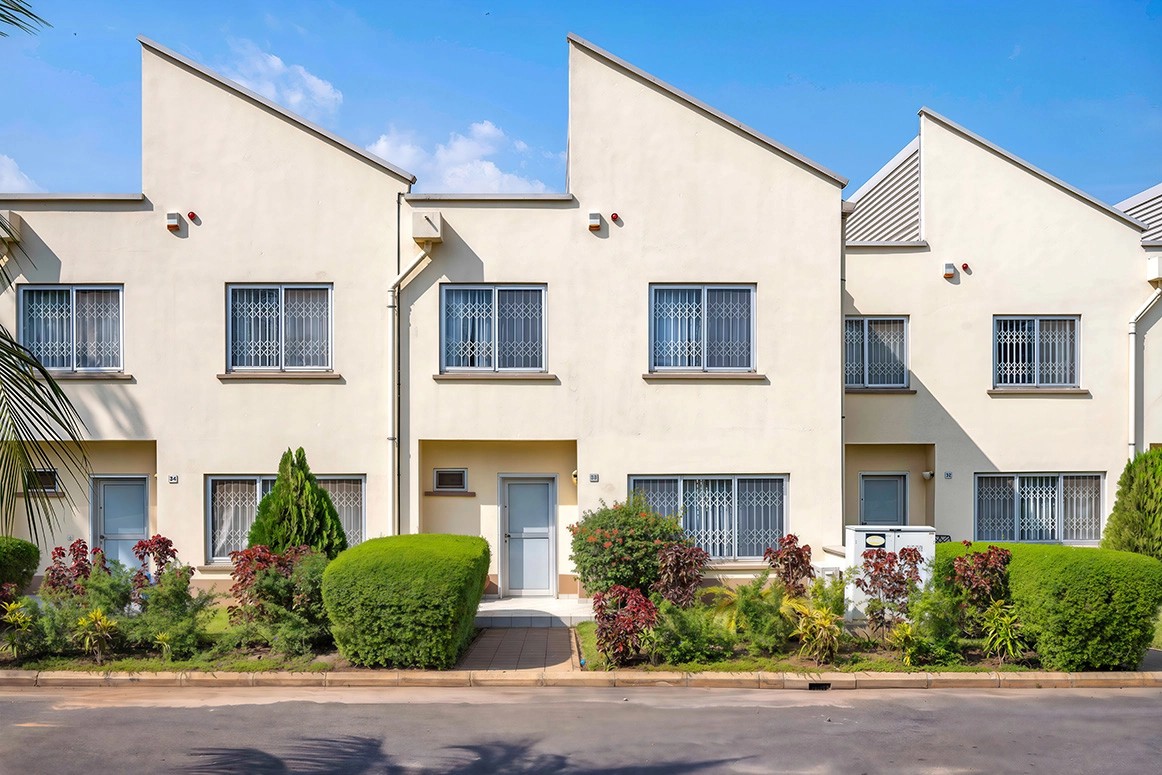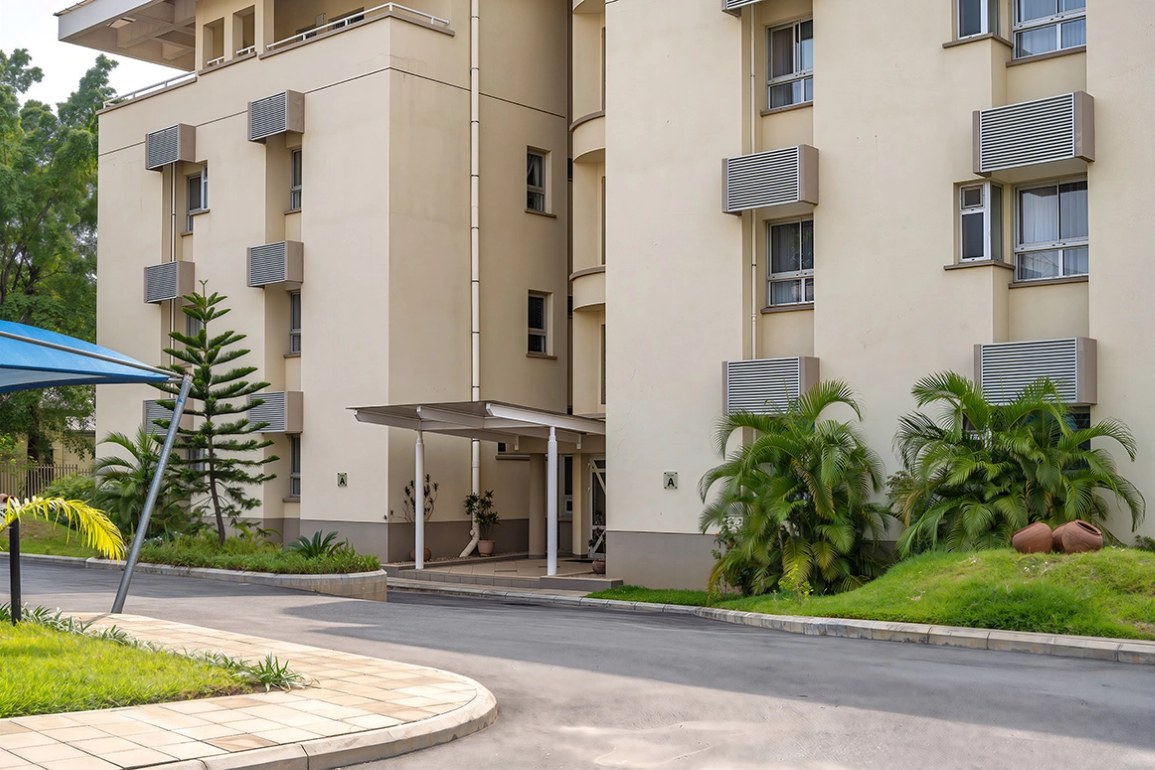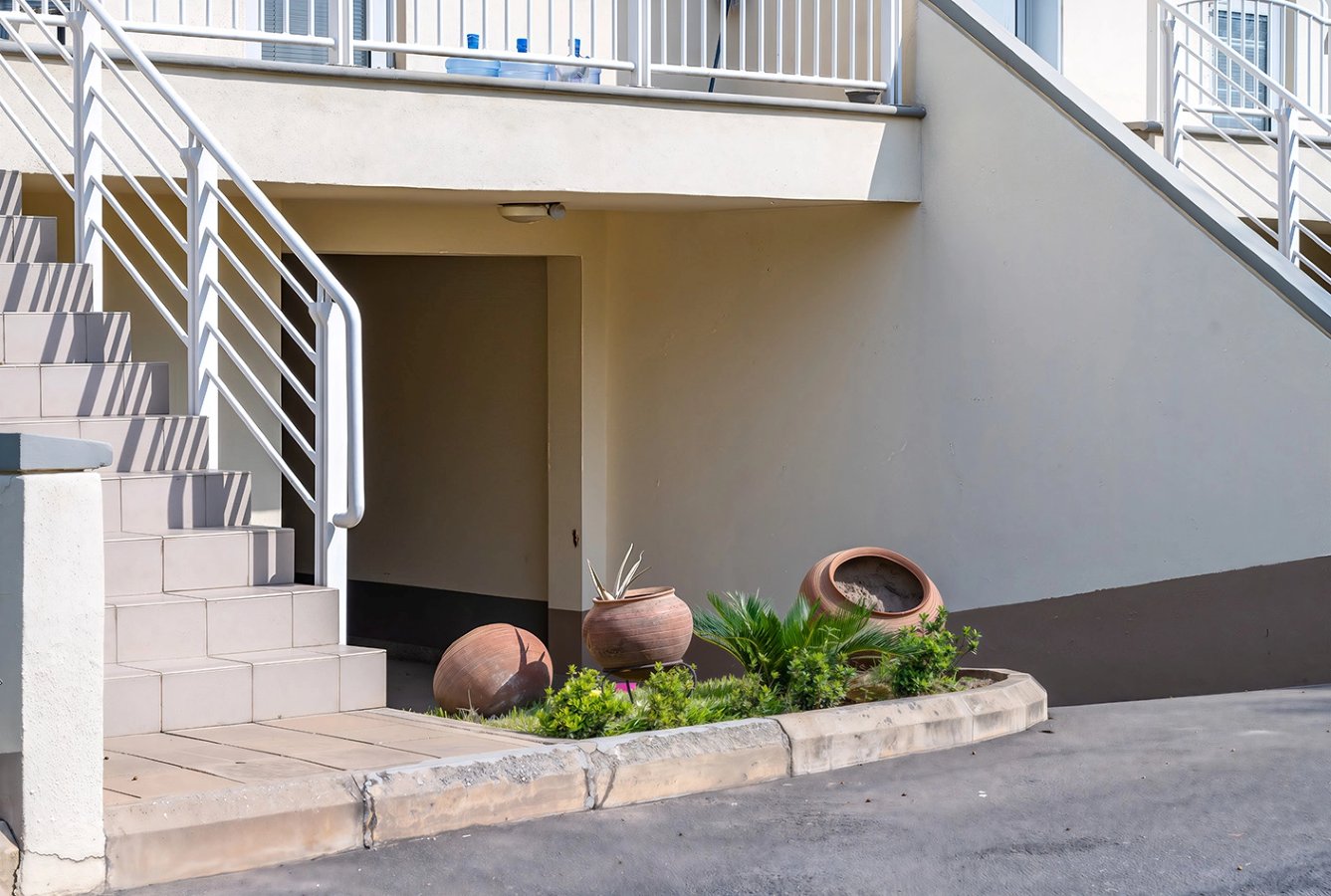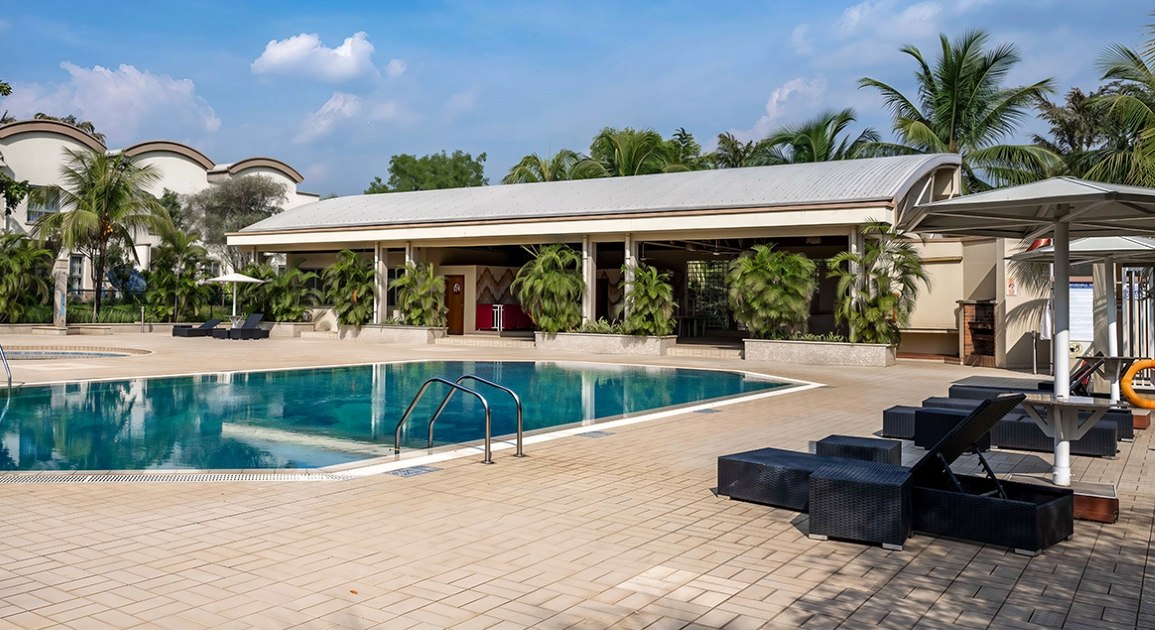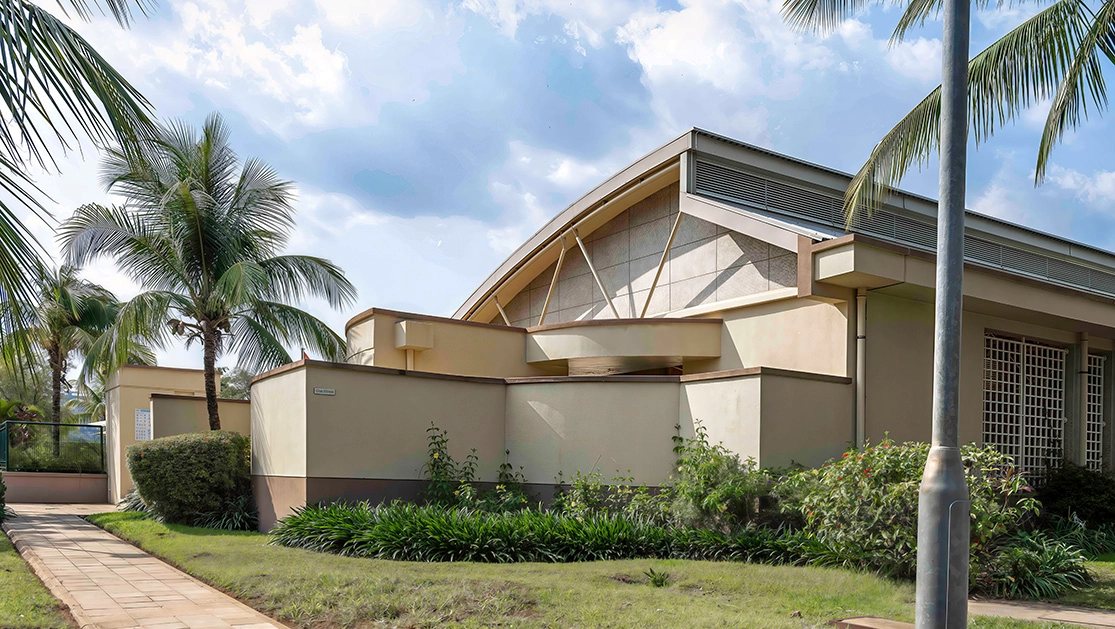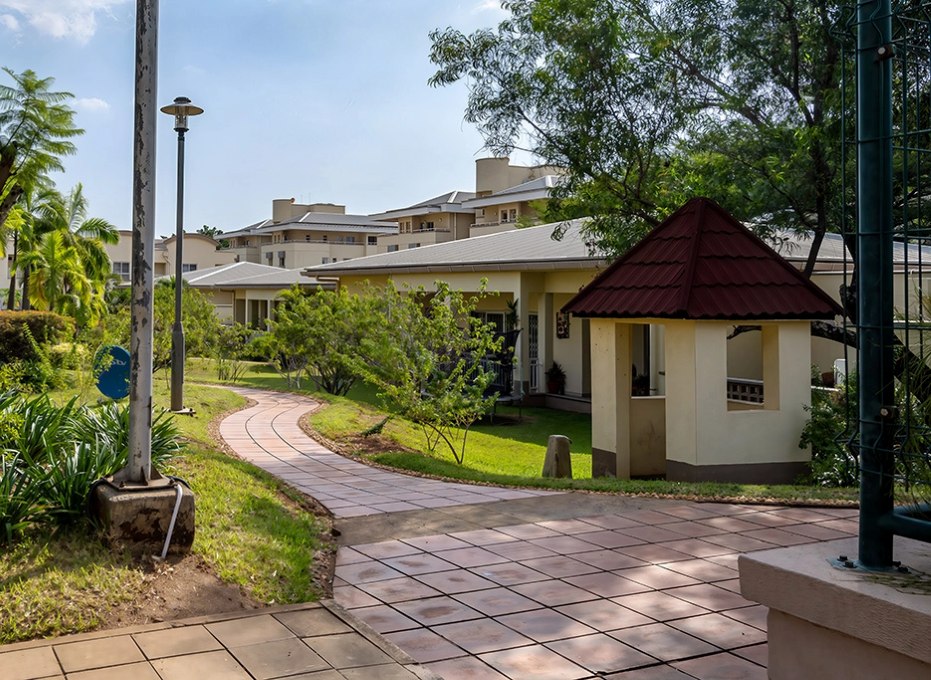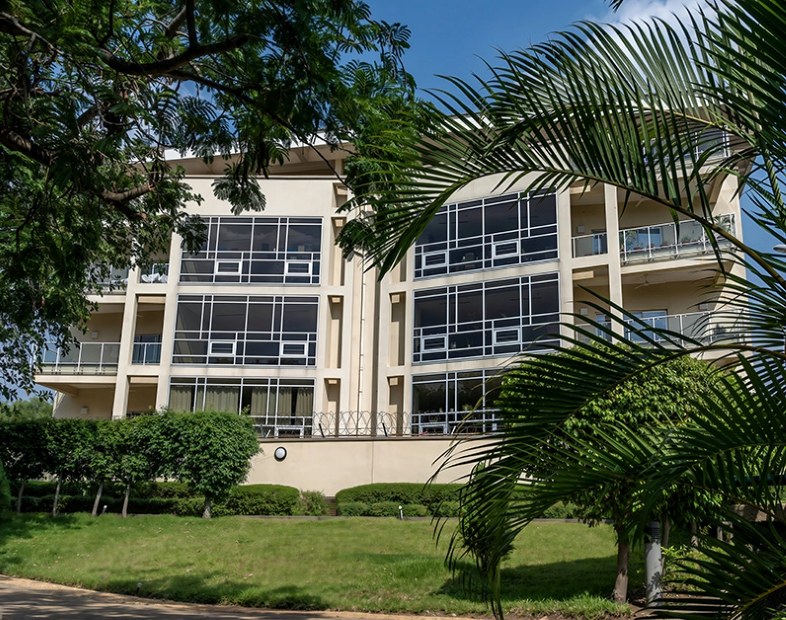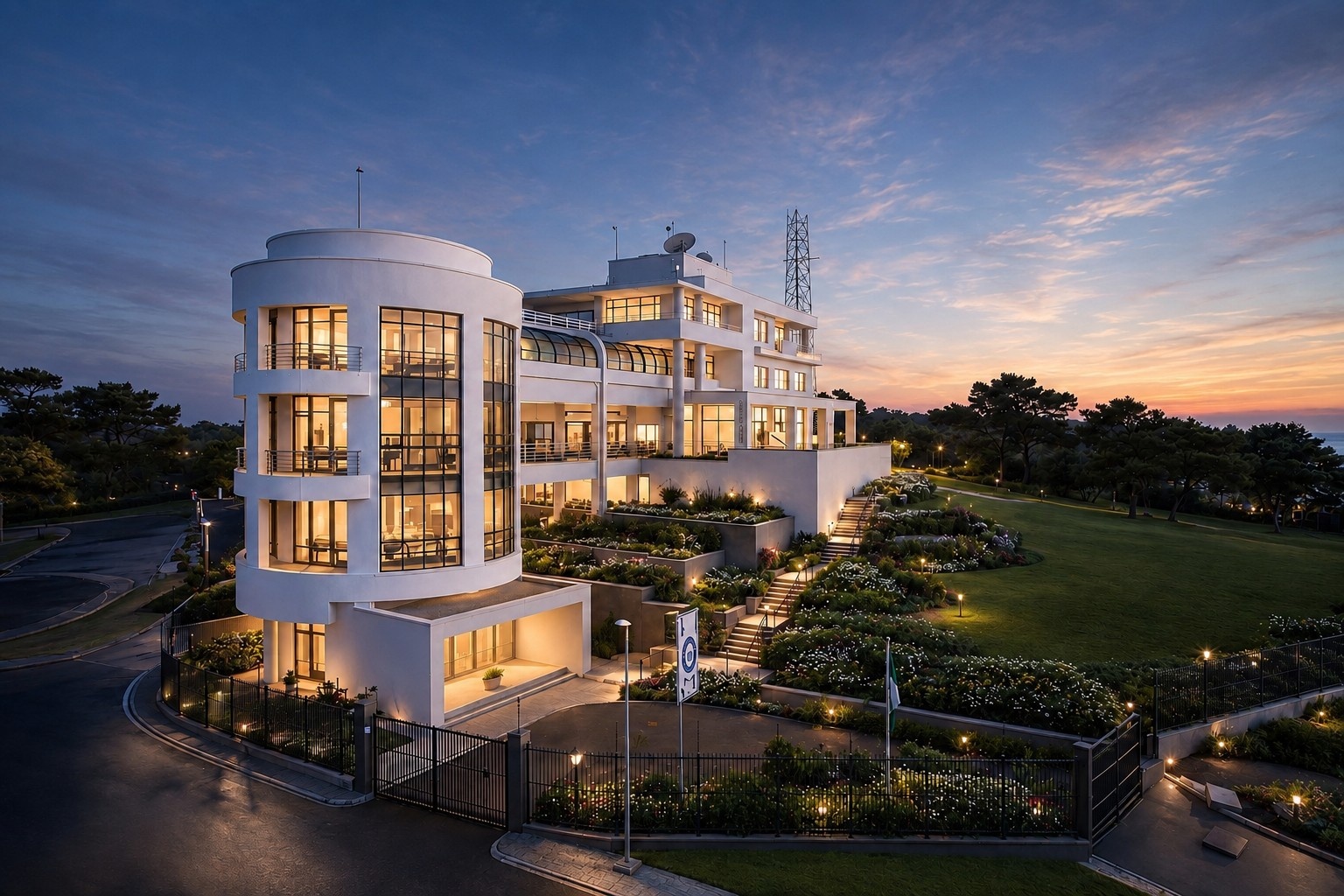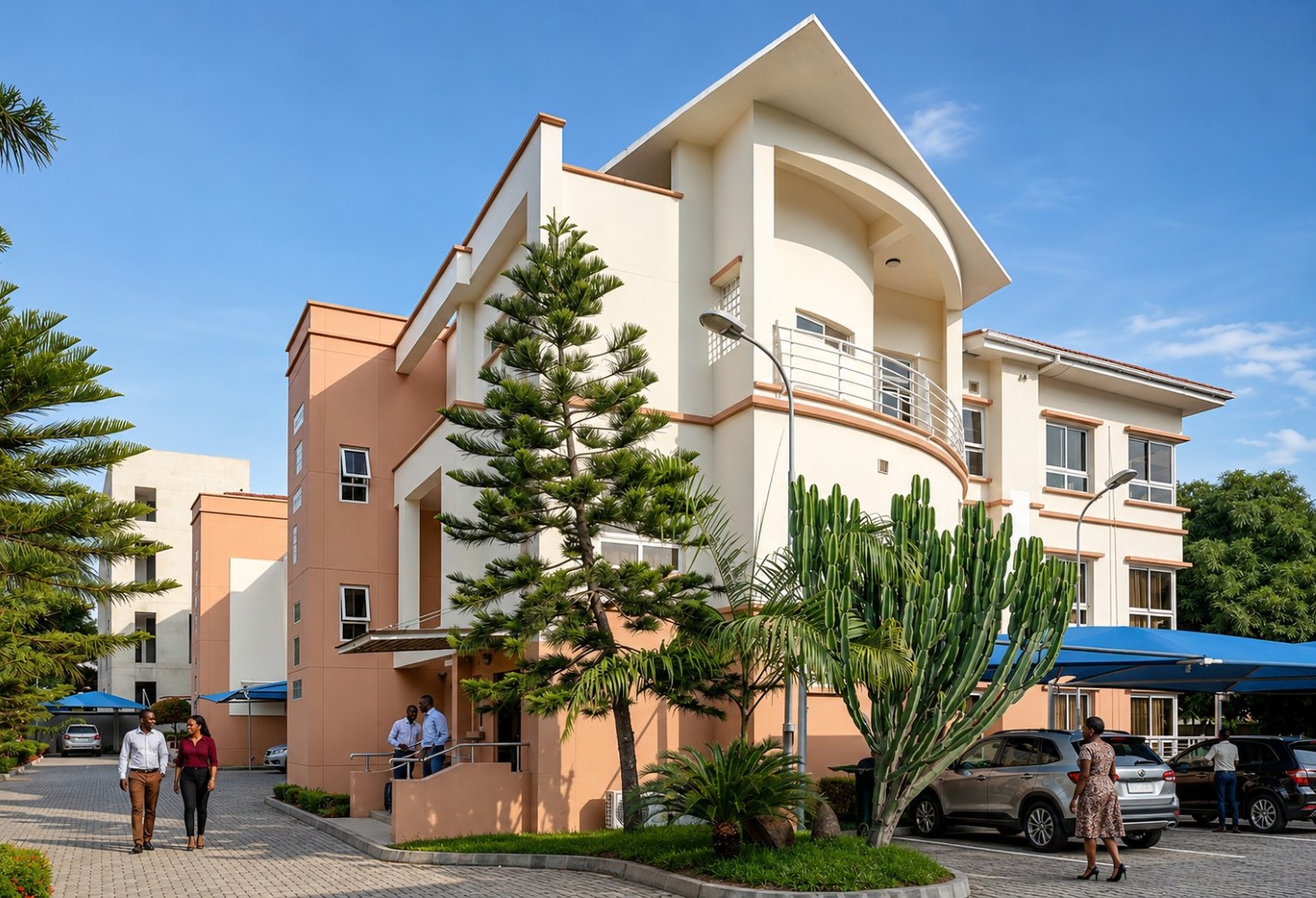


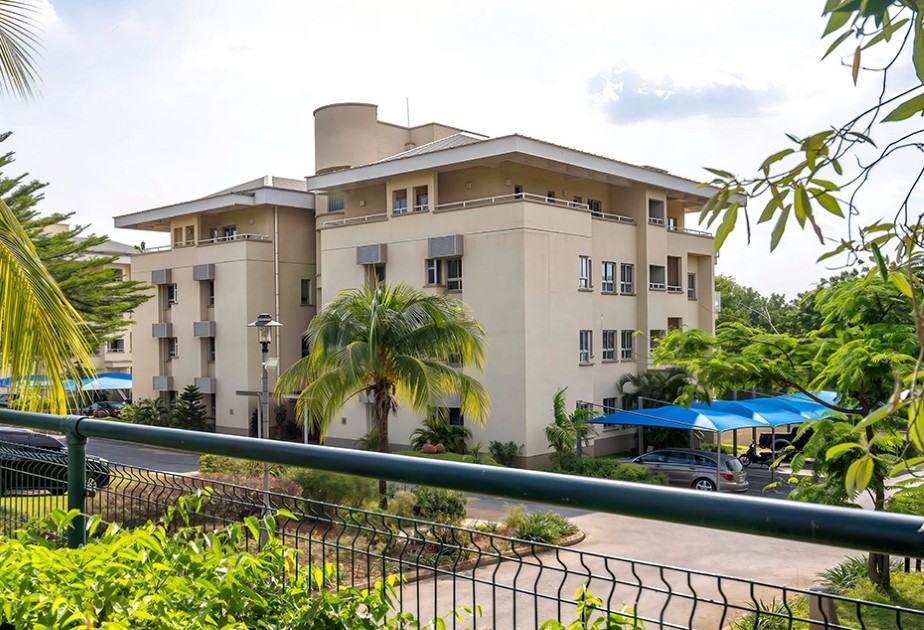
Shell Estate is conceived as housing as landscape, where buildings do not dominate the site but settle into it. The architecture defers to greenery, shade, and walkability, allowing the tropical environment to become the primary spatial experience. Rather than monumental forms, the project relies on repetition, porosity, and planting to create identity. The estate reads less like a development and more like a small neighborhood grown into a garden.
The planning strategy prioritizes human-scale circulation. Pedestrian paths, soft edges, and shaded walkways weave between the residential blocks, encouraging movement on foot and visual continuity across the site. Vehicles are present but visually secondary. This makes the experience of the estate sequential and calm, where residents encounter trees, lawns, and communal spaces before architecture.
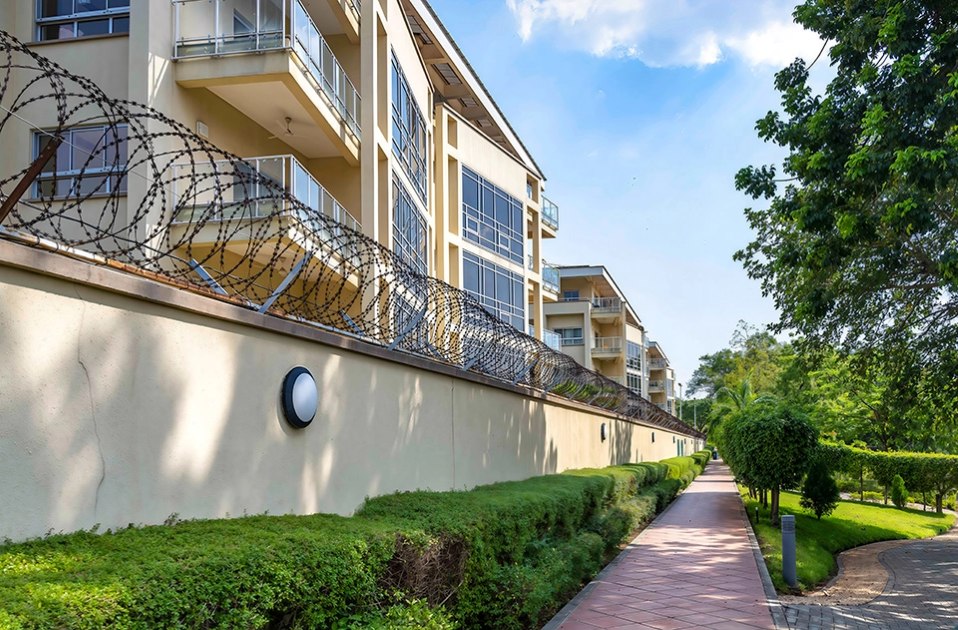
Architecturally, the buildings employ restrained, climate-responsive forms. Deep balconies, overhangs, light-colored facades, and operable openings manage heat while creating rhythm across the elevations. The repetition of blocks and townhouses builds visual order without monotony, because landscape, shadows, and small facade variations provide texture.
The clubhouse and pool act as the social heart of the estate. Their placement and openness contrast the residential blocks, signaling gathering, leisure, and community life. These shared amenities are not afterthoughts but anchors that define how residents relate to one another and to the estate as a whole.
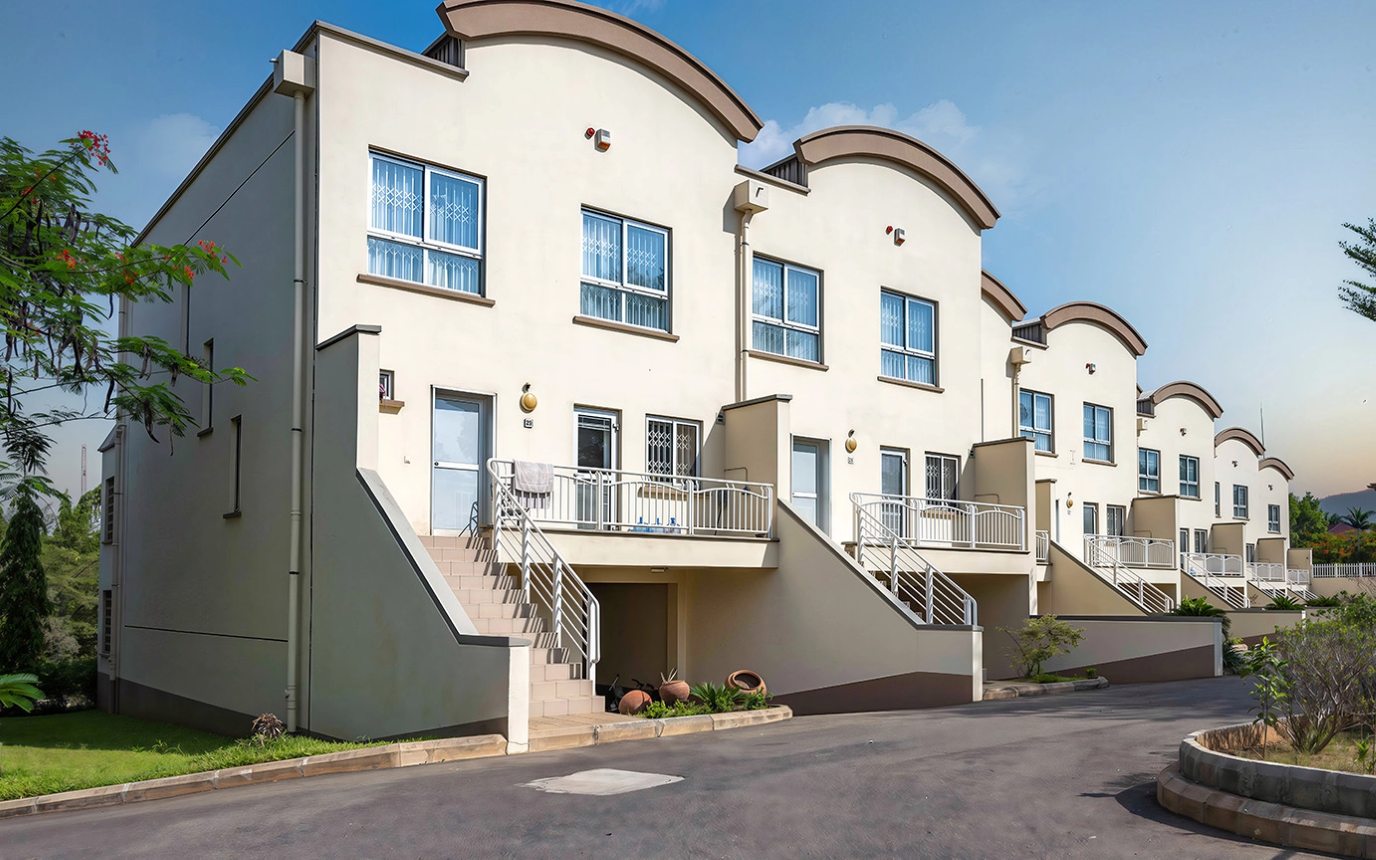
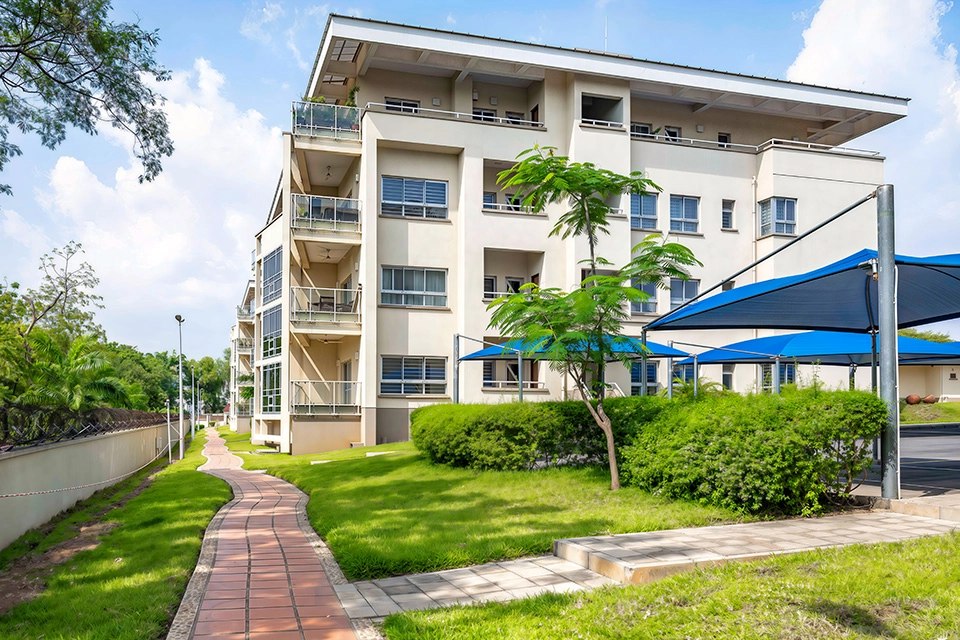
Security elements, perimeter walls, and controlled entries are integrated discreetly into hedges, pathways, and lighting, reinforcing a sense of protected serenity without visual harshness. The result is an environment that feels safe, breathable, and domestic rather than fortified.
A curated showcase of our built work, explore spaces designed for well-being, sustainability, and impact.