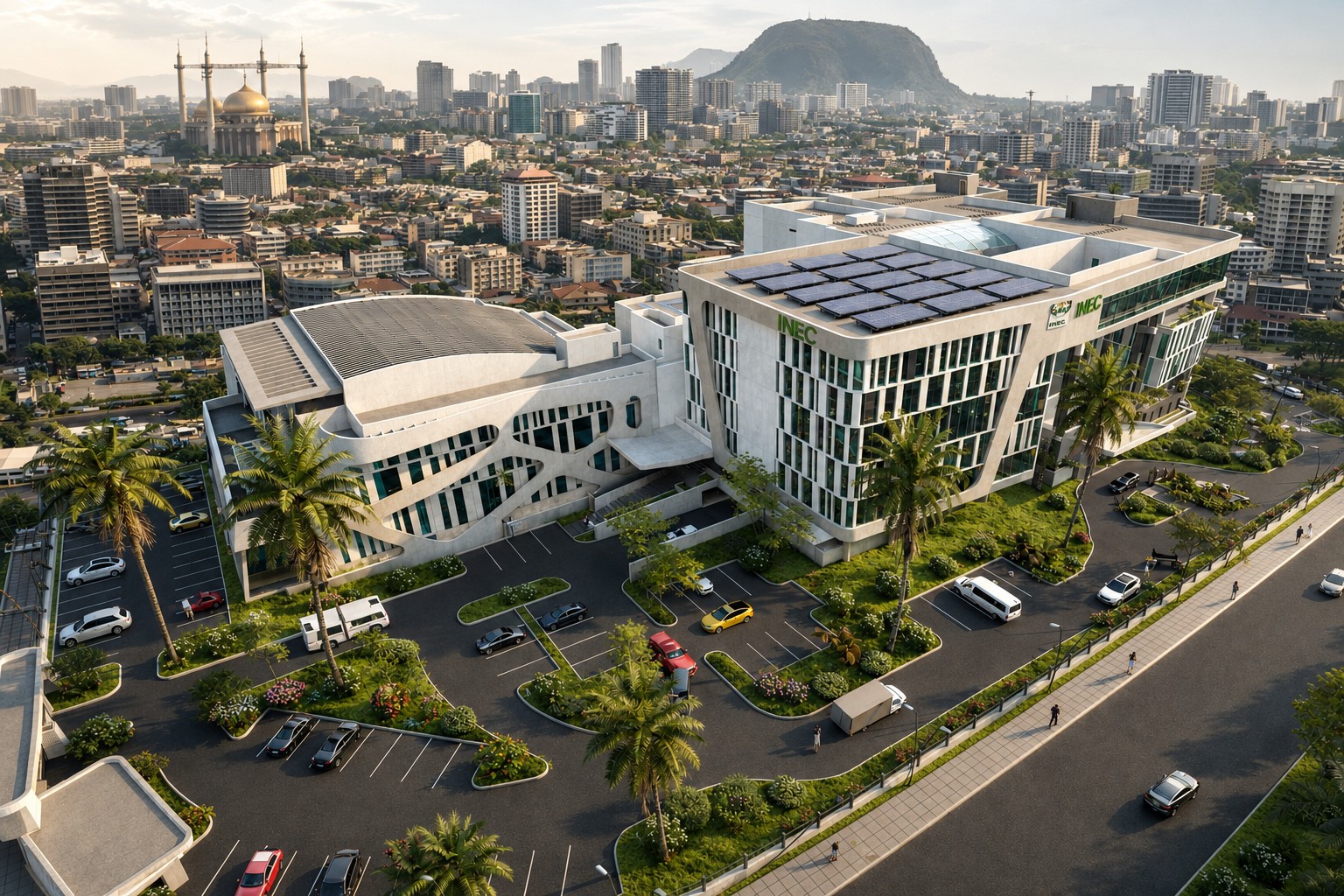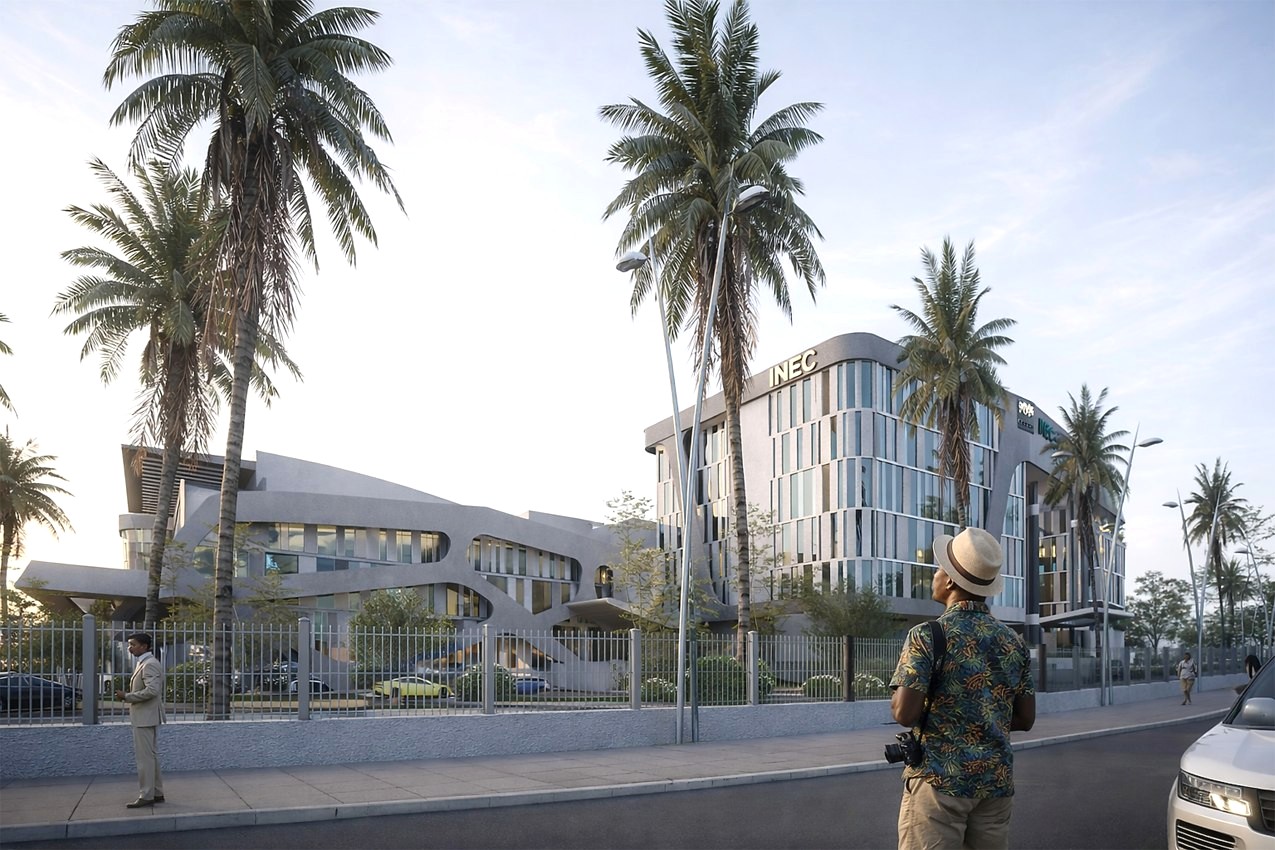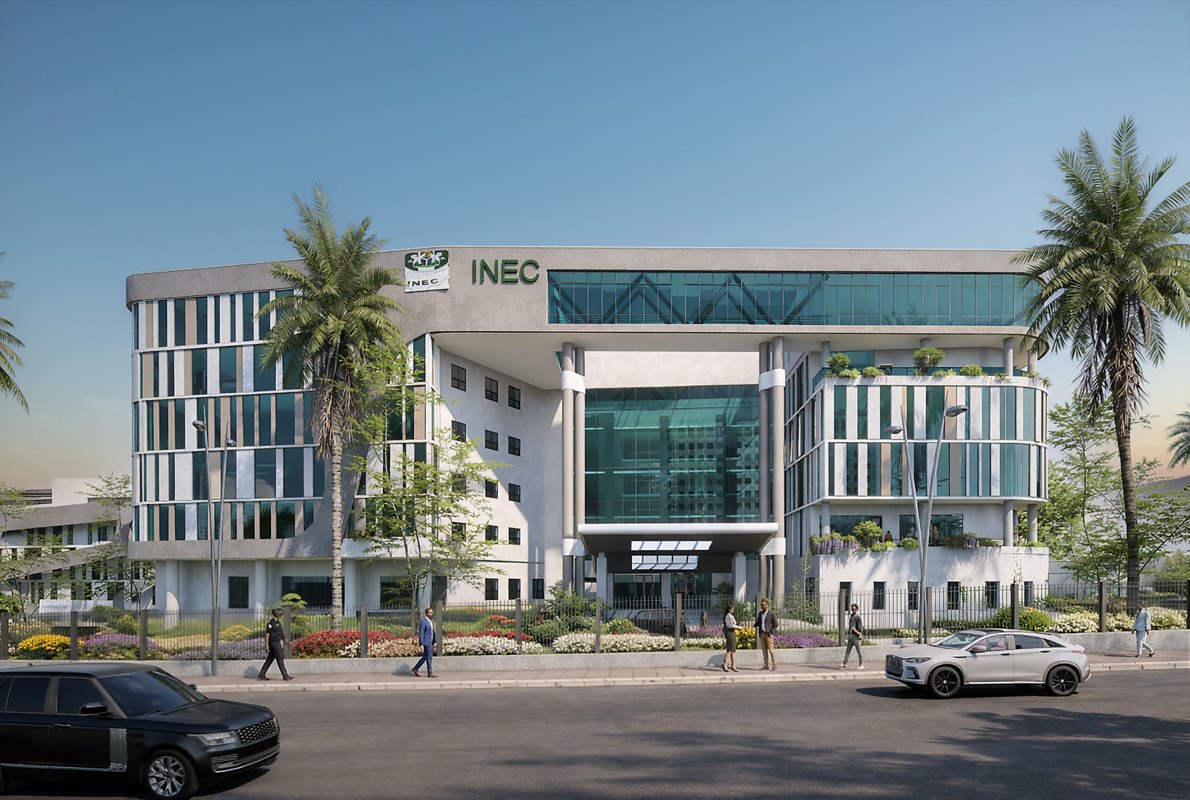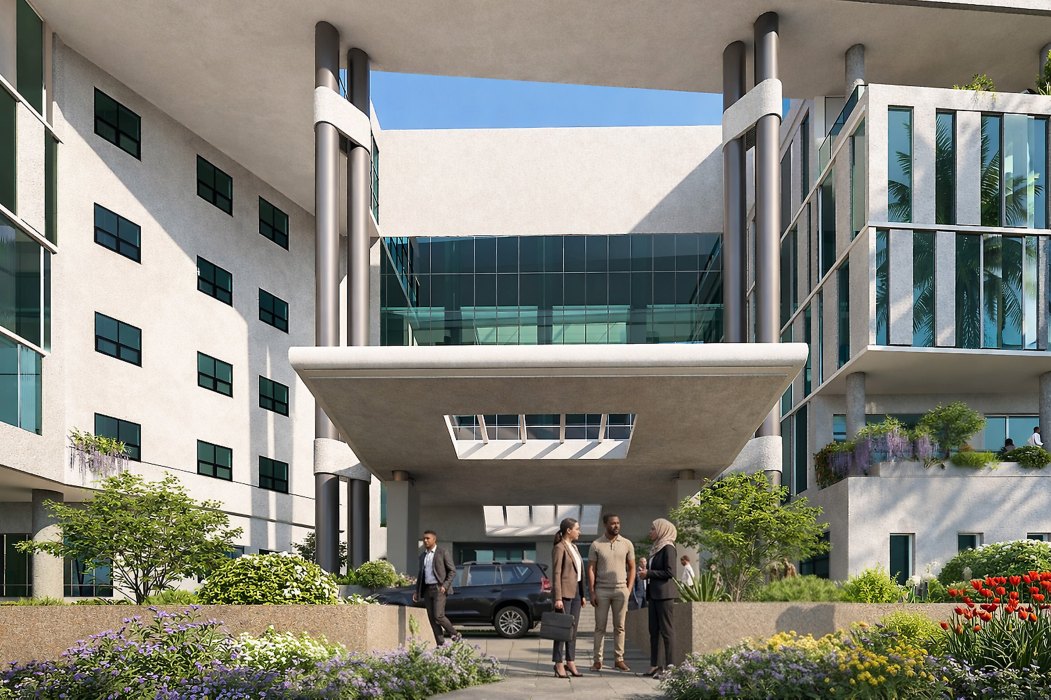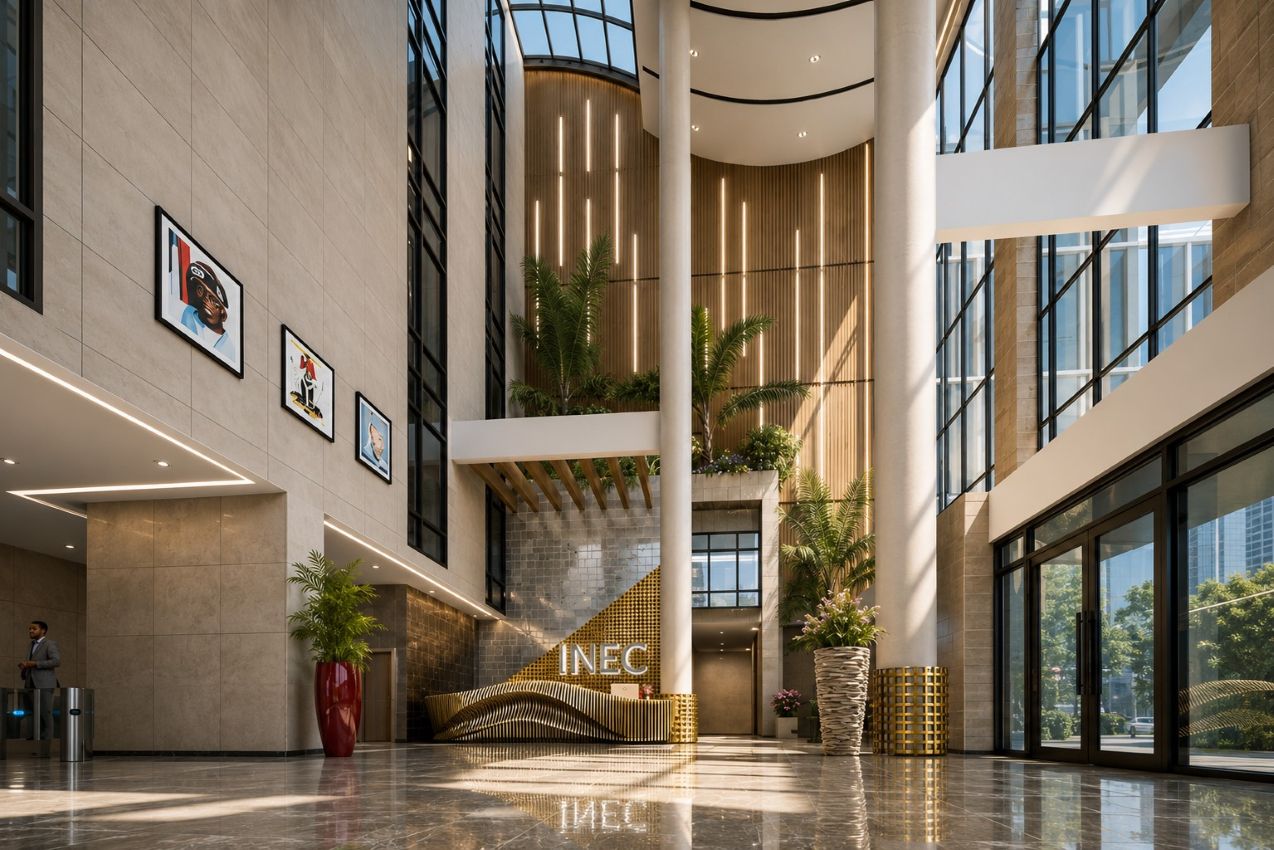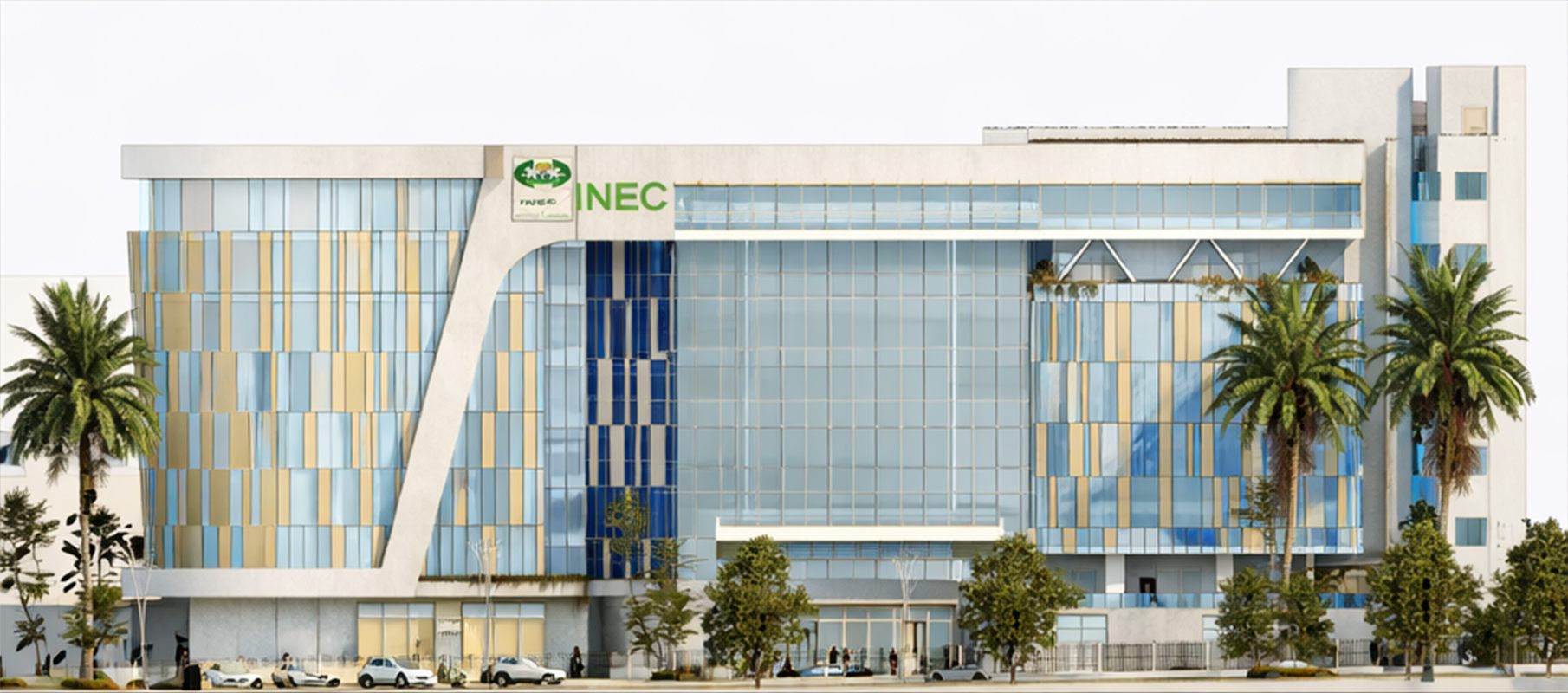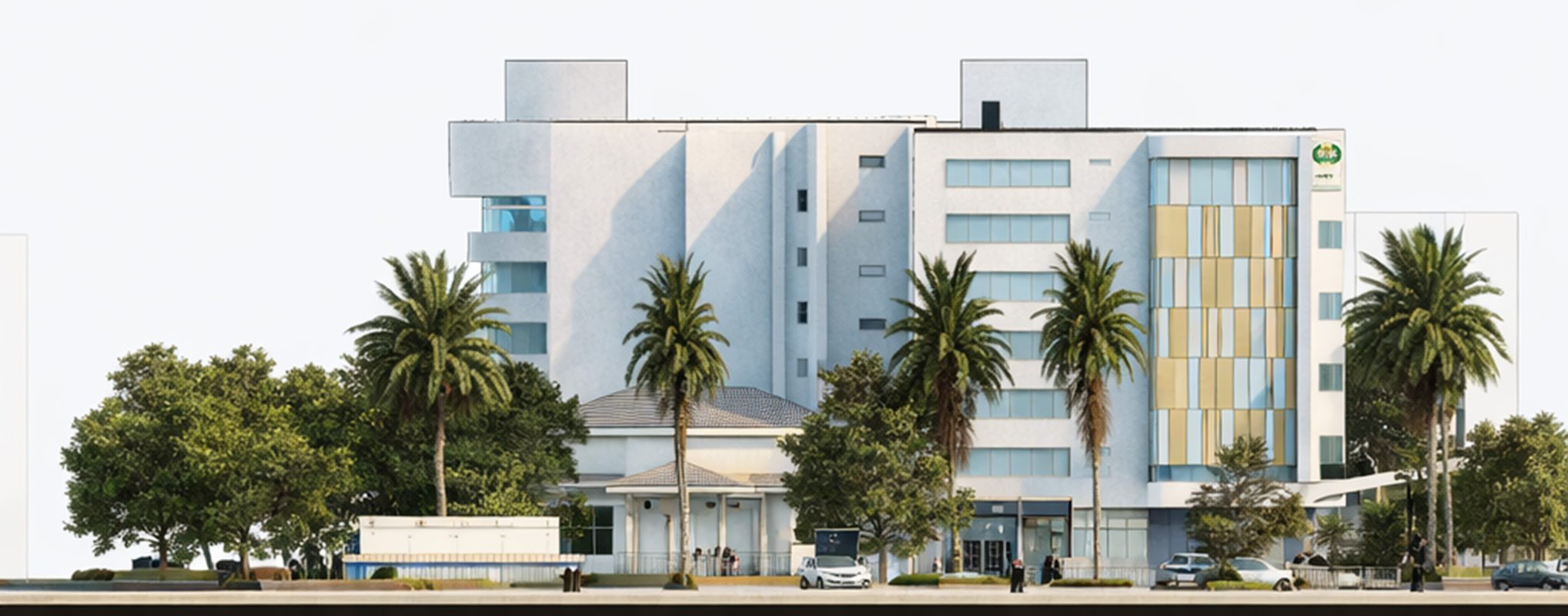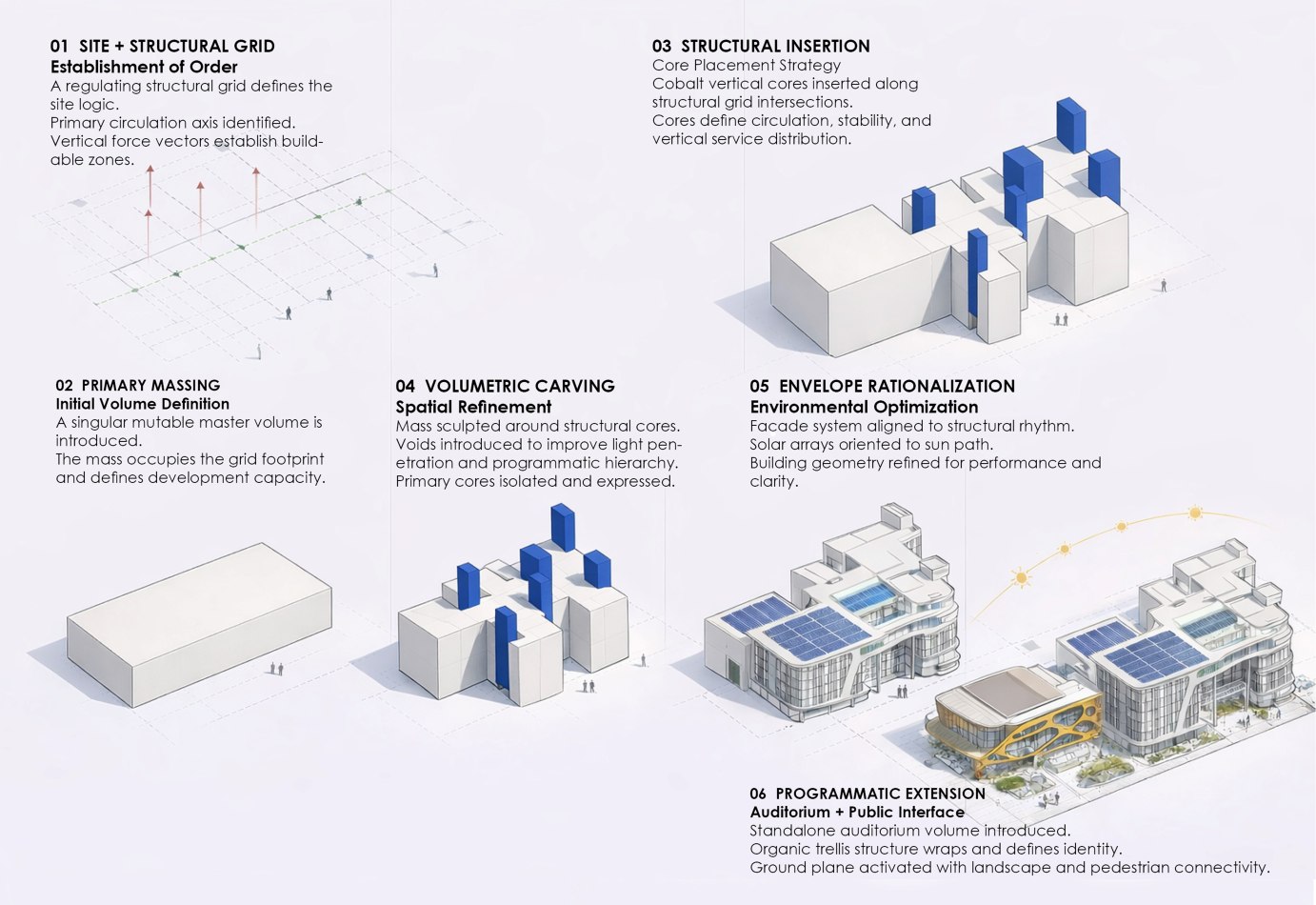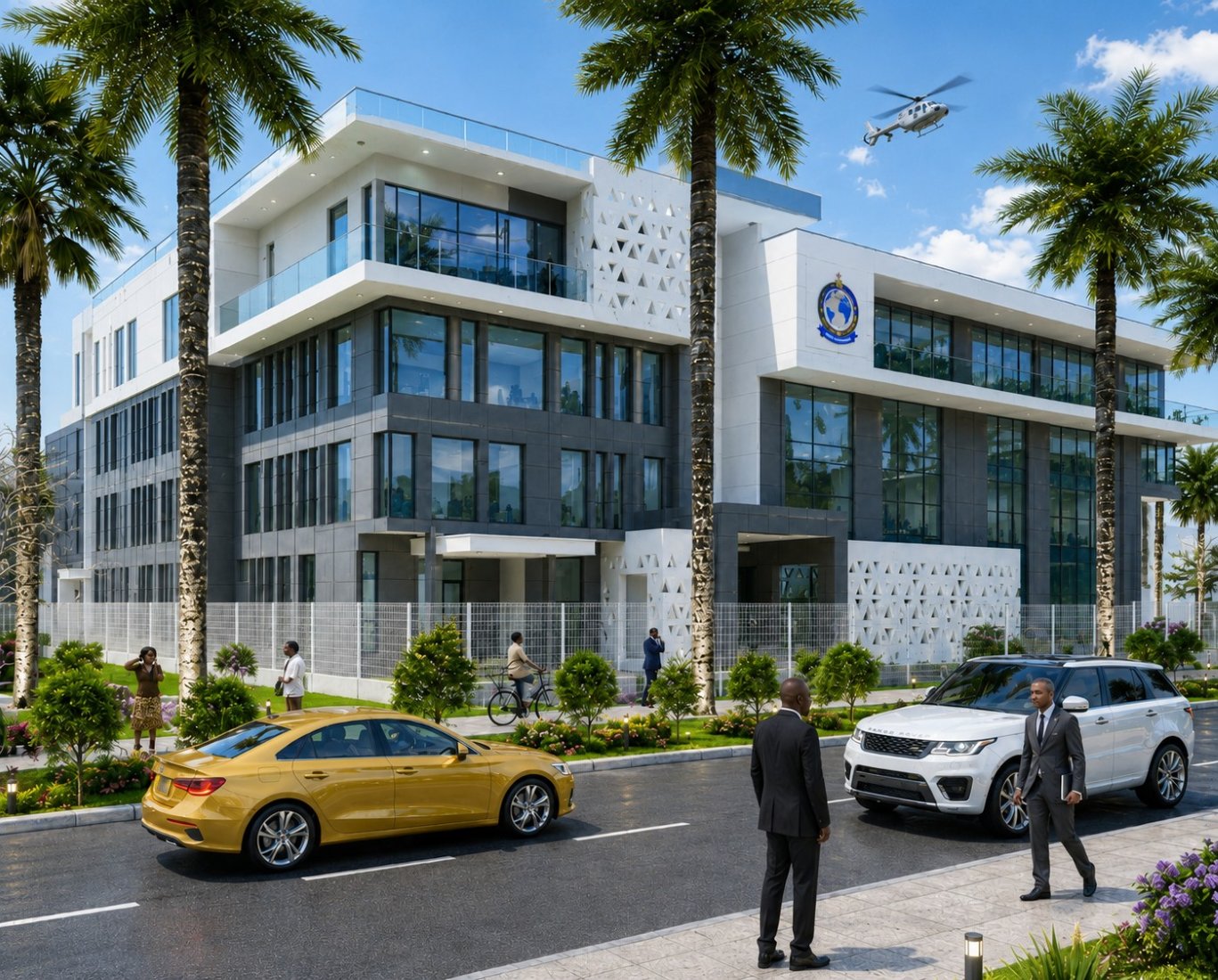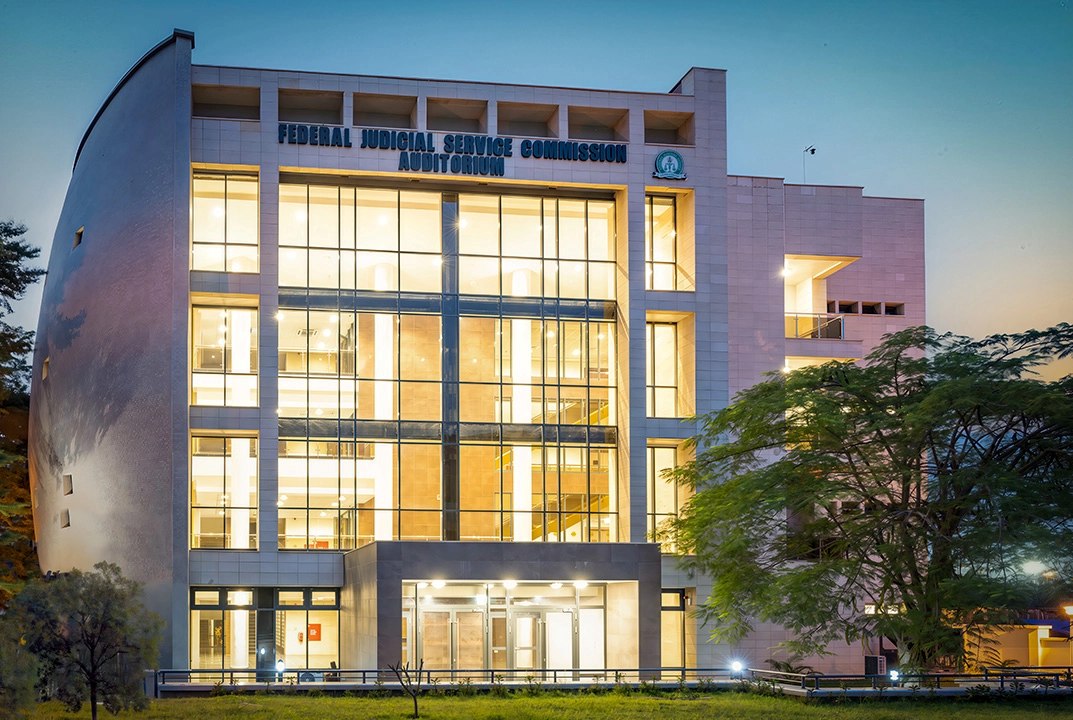


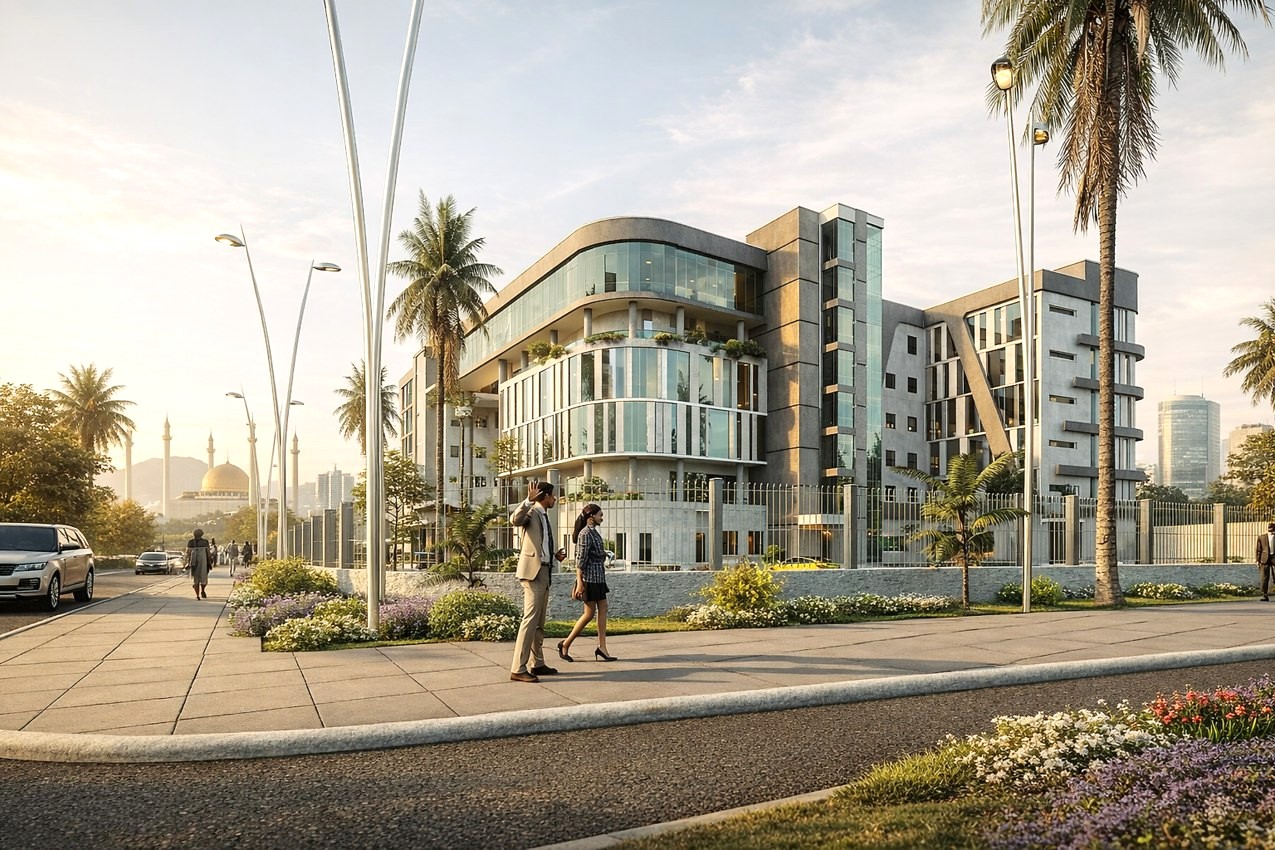
The INEC Headquarters Annex is conceived as a contemporary civic landmark, an architecture that expresses transparency, resilience and institutional integrity. Positioned to complete the eastern edge of Aguiyi Ironsi Street in Maitama, the building strengthens the urban fabric while establishing a clear civic presence. Its form is composed as an H-shaped configuration organised around a multi-storey, light-filled atrium, the symbolic and spatial heart of the institution. Open to the south, the fully glazed atrium draws natural light deep into the building and creates a visible expression of openness. Landscaped terraces, green walls, and vertical circulation animate this internal civic forum, dissolving the boundary between interior and exterior.
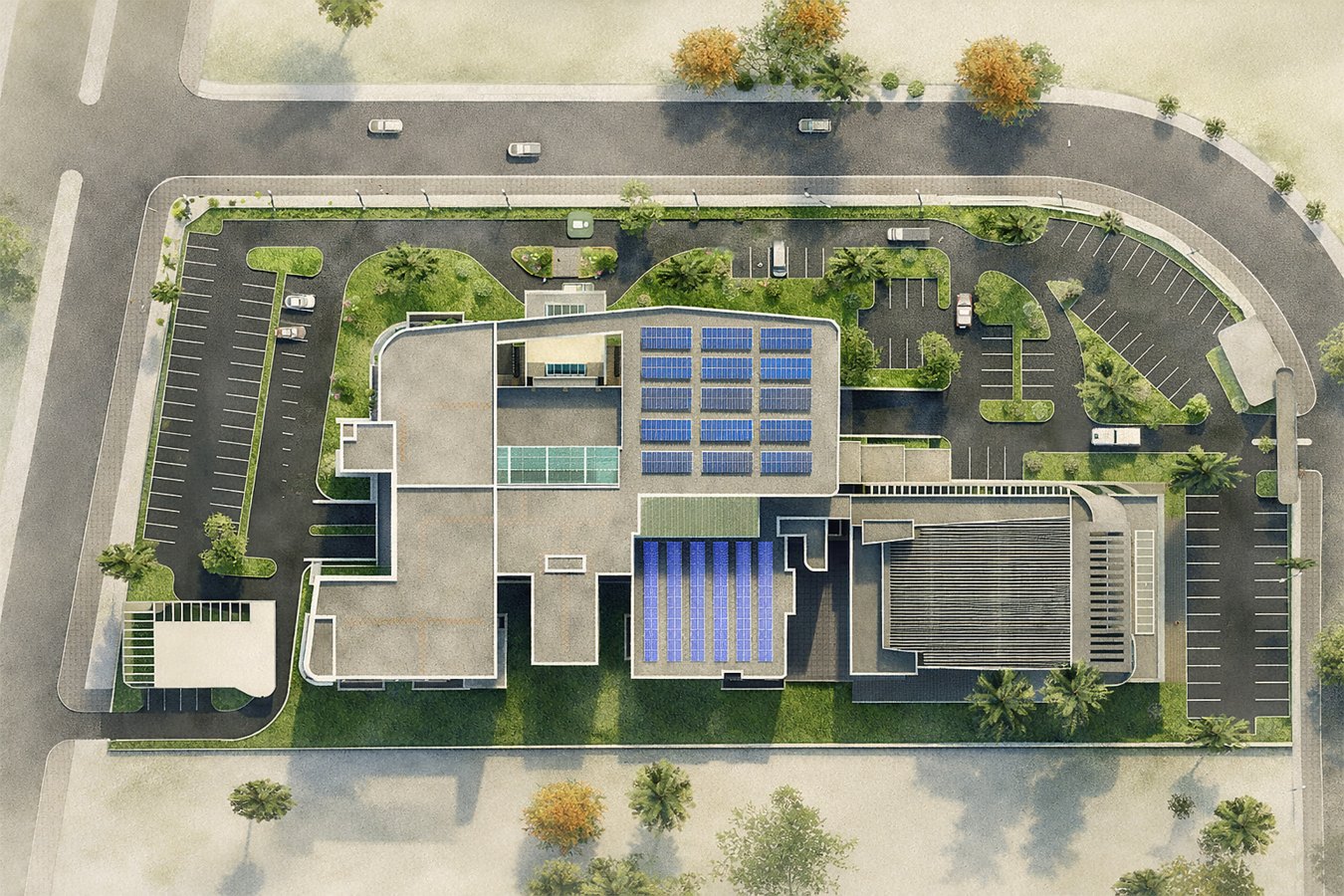
Integrated Site Strategy - The site is organized to improve district connectivity and prevent congestion. Public access is provided via Aguiyi Ironsi Street, while staff and VIP entries are strategically positioned along Zambezi Crescent to distribute traffic flows efficiently. Surface and basement parking accommodate 240 vehicles, including operational buses and trucks. A dedicated energy centre houses generators, transformers and essential infrastructure, ensuring operational resilience. Durable interlocking concrete paving and integrated landsc
Spatial Clarity & Institutional Order - The building separates public, staff and VIP access points, ensuring operational clarity while maintaining a dignified and welcoming civic threshold. A detached north-facing service core consolidates lifts, staircases and technical risers, freeing the primary volumes for highly adaptable office environments. Flexible floor plates are structured on a rational 10.8m grid, enabling future reconfiguration as institutional needs evolve.
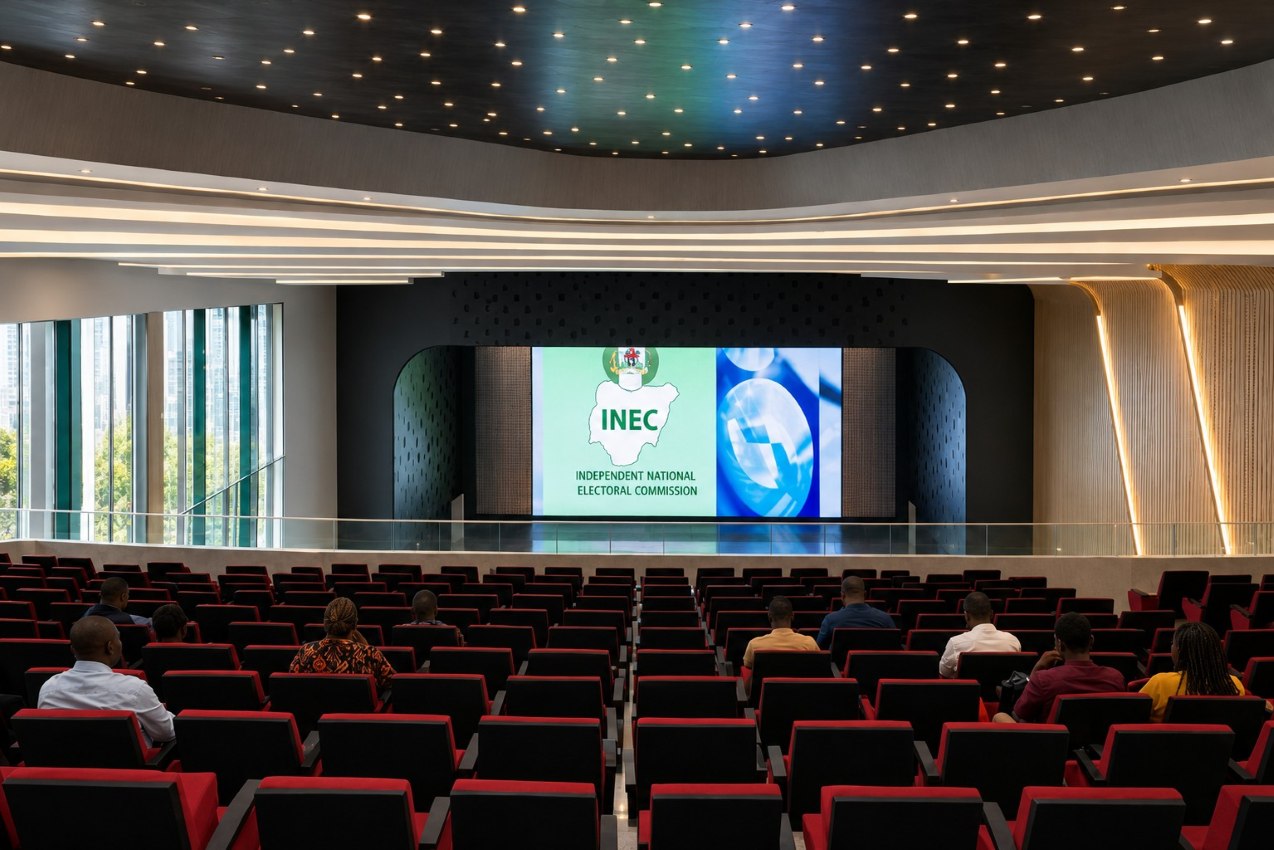
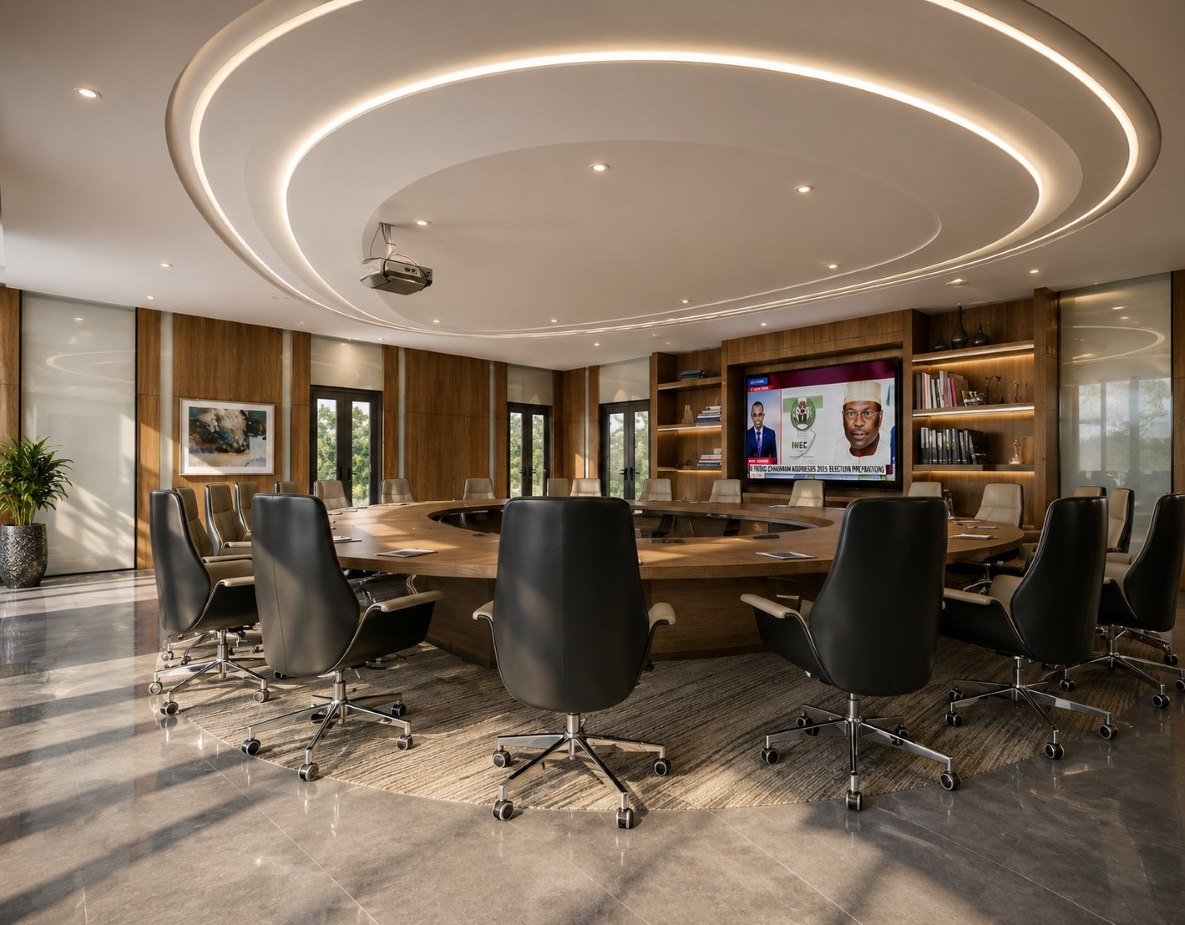
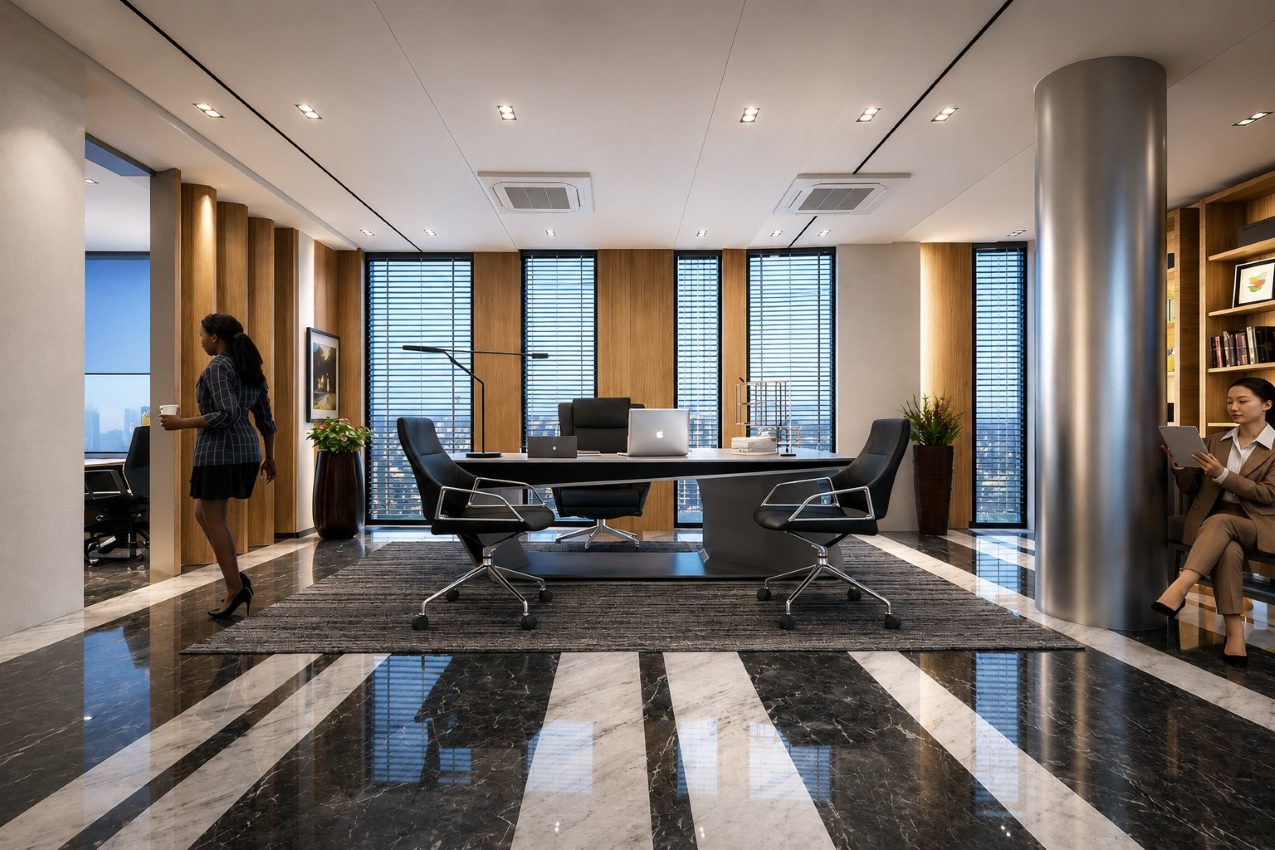
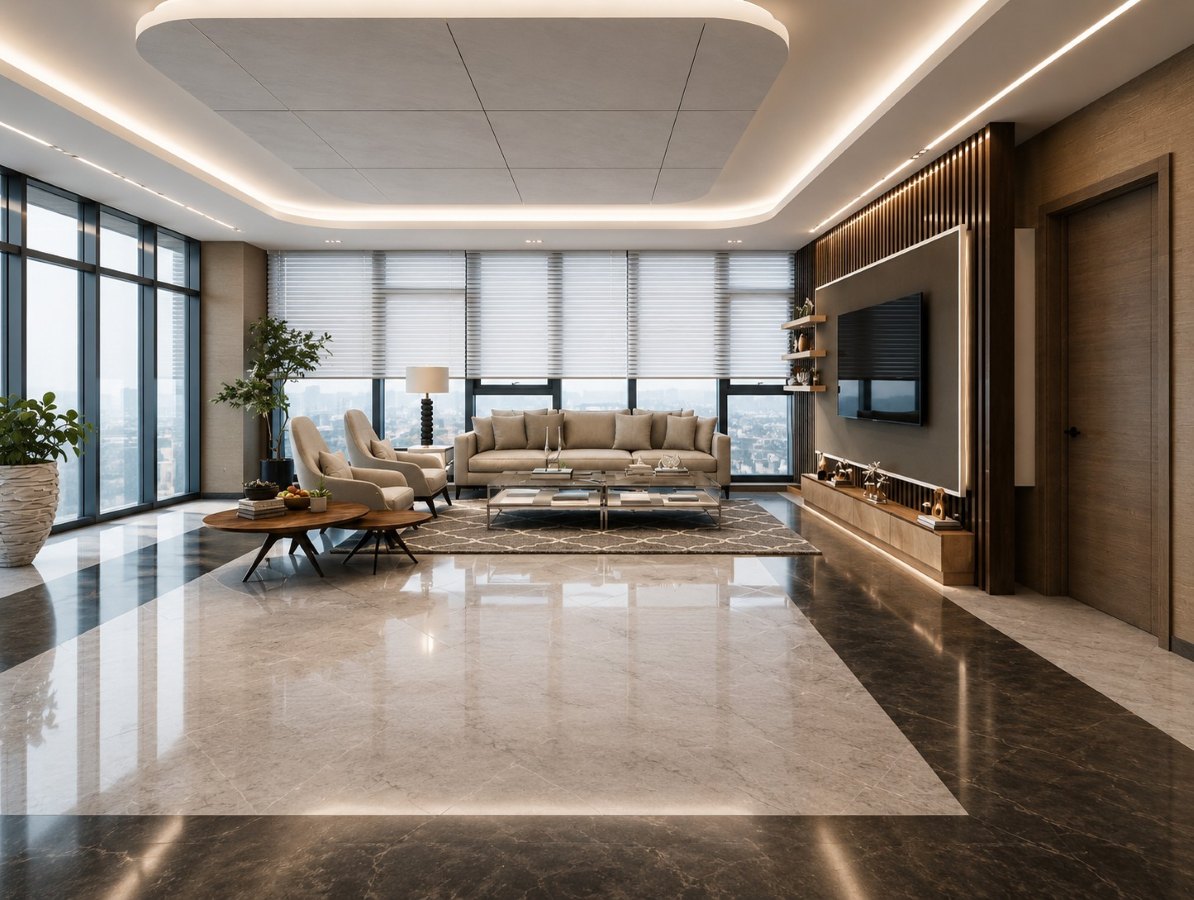
At ground level, the building accommodates a 1,000-seat auditorium, election monitoring situation rooms, archives, a museum, and public engagement spaces establishing the annex as both operational headquarters and civic interface. Upper floors house the National Commissioners, executive offices, meeting suites and departmental spaces, culminating in a boardroom, and Chairman’s office positioned at the highest level, overlooking Abuja’s cityscape and distant hills.
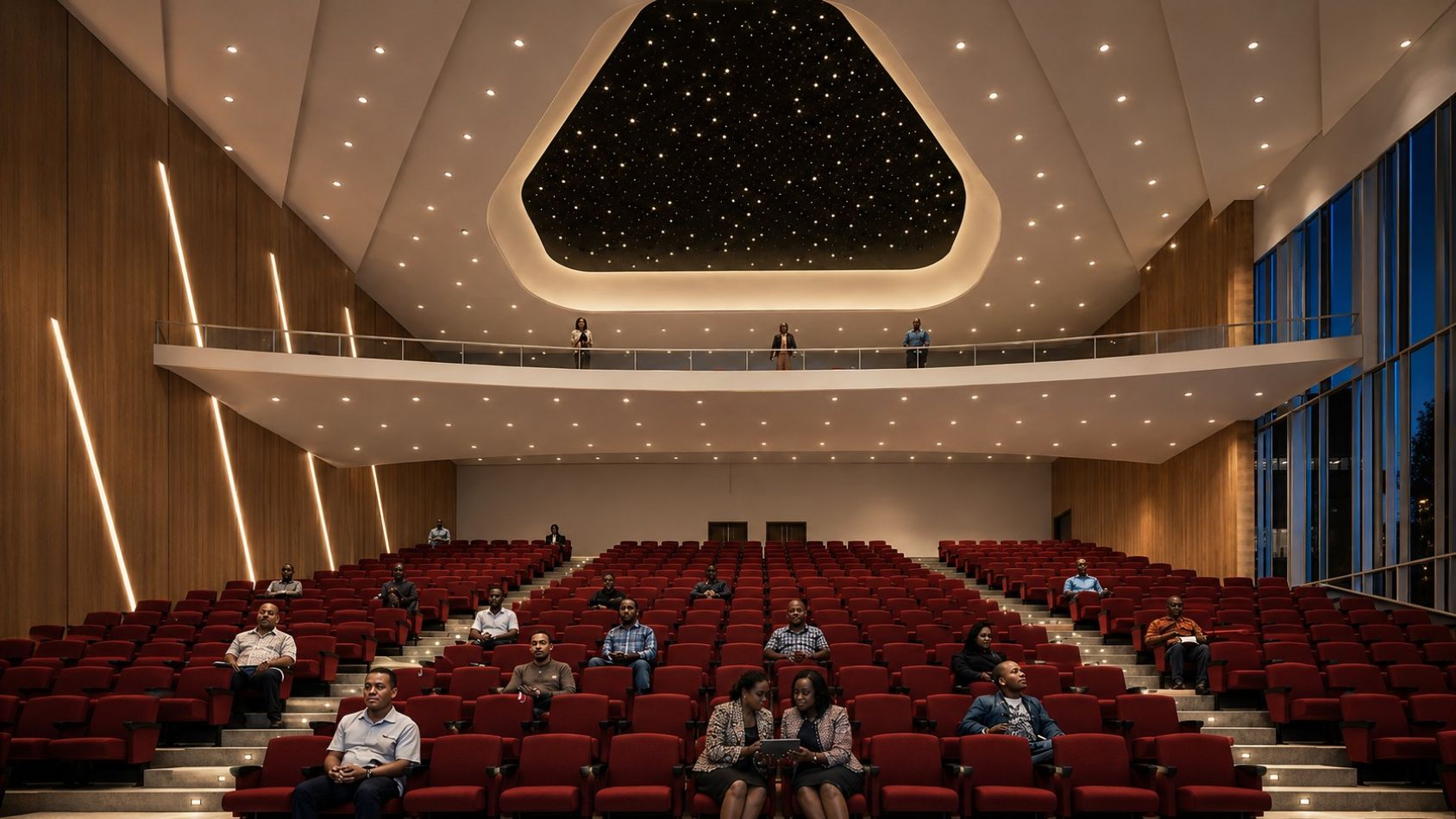
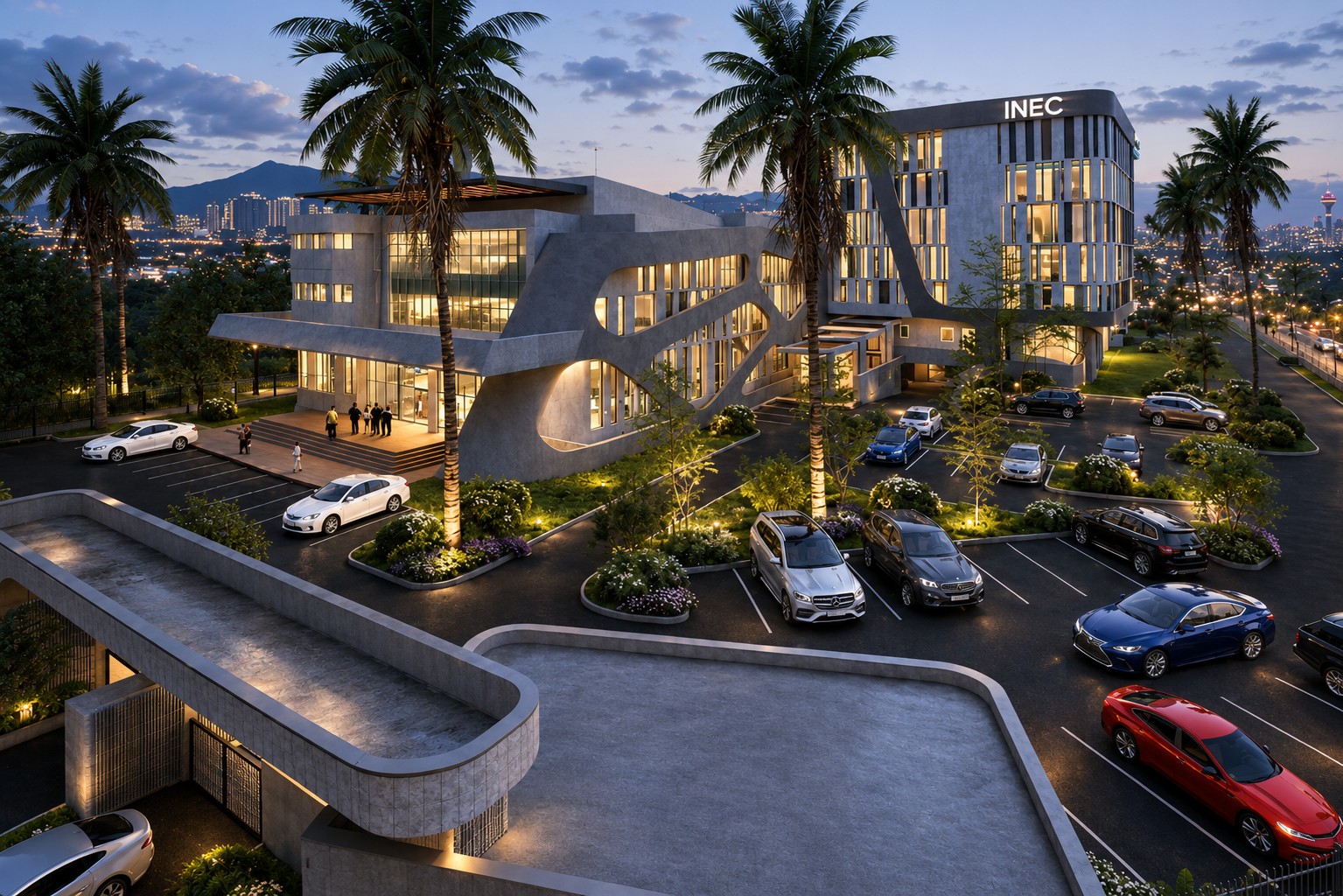
The facade expresses institutional openness through transparency, while its structural rhythm subtly references the democratic process. A high-performance double skin system protects the west elevation from intense solar gain, moderating heat while preserving daylight quality. Modulated solids and voids, combined with shaded glazing, respond precisely to Abuja’s climatic conditions. An extensive green roof enhances thermal performance and provides an accessible observation terrace offering panoramic views across the capital.
Sustainability - Environmental performance is embedded throughout the design: 1). Passive solar orientation and natural ventilation. 2). Photovoltaic integration. 3). Rainwater harvesting and grey water recycling. 4). Sensor-controlled lighting systems. 5). Green roofs and vertical landscaping. 6). High-efficiency mechanical systems. 7). Locally sourced and recycled materials
A curated showcase of our built work, explore spaces designed for well-being, sustainability, and impact.